In the fast-paced world of electric vehicles (EV), the acquisition of assets is not just a financial decision but also an accounting one. Hence understanding accounting for Assets and the nuances of initial recognition, measurement, subsequent measurement, presentation, and disclosure is crucial for accurate financial reporting and compliance with accounting standards. Let’s plug into these concepts with a real-world example from the EV industry.
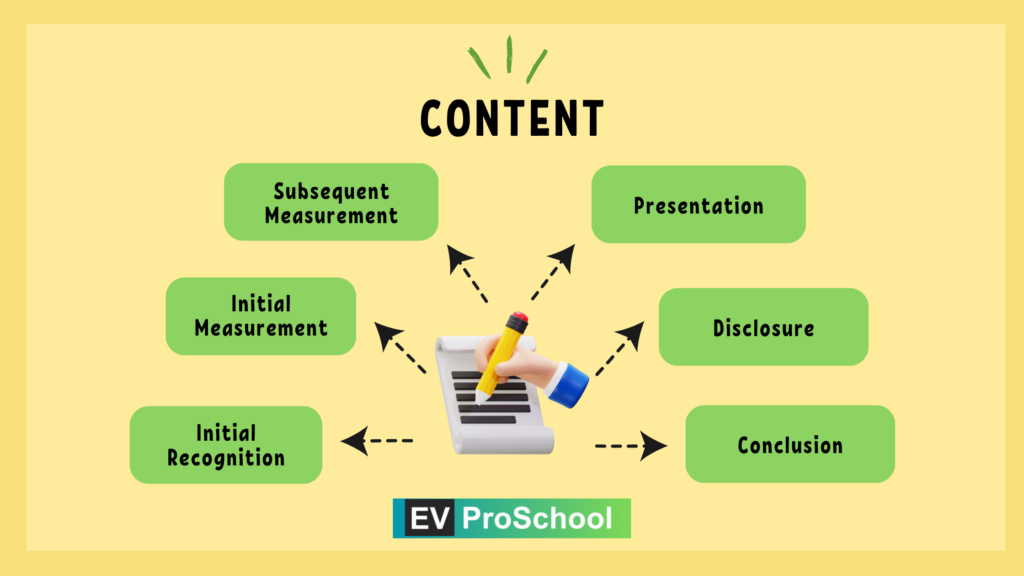
Initial Recognition:
Initial recognition in accounting is all about the timing of when a transaction is recorded in the books. For an EV company that purchases a magnetizer, the point of recognition is typically when the asset is ready for use.
Example: If the EV company issued a purchase order (PO) for a magnetizer on February 1st, received the machine on February 10th, installed it by February 15th, and it was ready for use on February 20th, the transaction should be recorded on February 20th. This is when control of the asset passes to the company, and it’s ready to contribute to the production process.
Initial Measurement:
The initial measurement determines the value at which the asset is recorded upon recognition. Typically, this includes the purchase price and any additional costs necessary to bring the asset to its working condition.
Example: The cost of the magnetizer would include its purchase price, transportation costs, installation charges, and any other direct costs until the asset is ready for use.
Subsequent Measurement:
Subsequent measurement deals with how an asset is accounted for after its initial recognition, particularly depreciation. Depreciation accounts for the asset’s wear and tear over time and its use in the production process.
Example: The magnetizer’s depreciation could be calculated using the straight-line method, where its cost is spread evenly over its useful life. If the magnetizer’s cost is INR 1 million and it has a useful life of 10 years, the annual depreciation expense would be INR 100,000.
Presentation:
Presentation refers to how these numbers show up in financial statements. Depreciation expense is typically presented in the statement of profit and loss (P&L) as it’s an operating cost that reduces the company’s profit.
Example: The annual depreciation of the magnetizer would appear as an expense on the EV company’s P&L, reducing its taxable income.
Disclosure:
Disclosure is about providing additional details in the financial statements that explain the numbers. This could include the nature of the asset, the depreciation methods used, and any related financial policies.
Example: The EV company’s financial statements would disclose the cost, accumulated depreciation, and net book value of the magnetizer, alongside the depreciation method and useful life assumption.
Conclusion
For companies in the electric vehicle industry, managing the financial aspects of asset acquisition and accounting is as important as the engineering feats that make EVs possible. By applying these accounting principles, companies ensure transparency and provide stakeholders with a clear picture of their financial health.