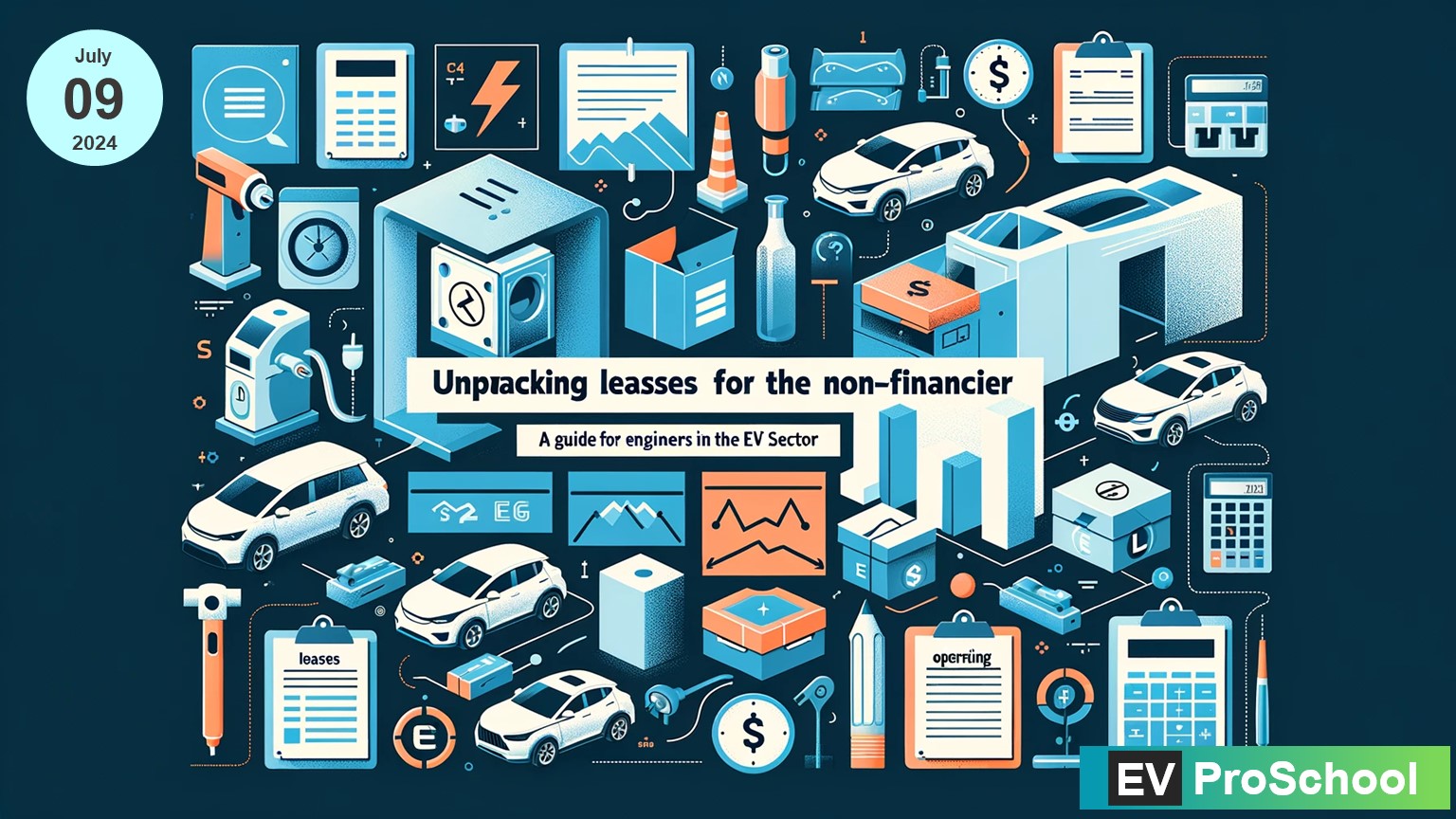
In the world of electric vehicles (EV), where innovation meets pragmatism, understanding financial fundamentals such as leases can be as crucial as engineering breakthroughs. Let’s break down the concept of finance and operating leases in terms everyone can grasp, akin to distinguishing between AC and DC charging but in the financial realm.
What Are Finance and Operating Leases?
Imagine you’re deciding whether to buy a high-capacity battery for your EV project or simply rent it. Buying it (akin to a finance lease) means you’re all in – it’s yours, with all the associated ups and downs. Renting it (similar to an operating lease) is more like a test drive; you use it, but it’s not yours to keep forever.
Finance Lease:
In a finance lease, you, the lessee, essentially take on many of the risks and rewards of ownership (even if the title might not formally transfer). It’s like buying a high-precision tool for your EV lab on an installment plan: while you haven’t paid it off yet, it’s essentially yours to use, modify, or even accidentally break.
Accounting 101:
- Recognition: The asset comes onto your balance sheet, representing your right to use it, along with a liability reflecting what you owe over time.
- Subsequent Recognition: You’ll depreciate the asset over its useful life and recognize interest on the lease liability, akin to acknowledging both the wear and tear of your tool and the cost of financing it.
Entries Simplified:
- Initial: Debit Right-of-Use Asset, Credit Lease Liability
- Subsequent: Debit Depreciation Expense, Credit Accumulated Depreciation; Debit Interest Expense, Credit Lease Liability
Operating Lease:
An operating lease is more straightforward – think of it as renting that high-capacity battery. It’s a simpler commitment; you use the asset, but it doesn’t appear on your balance sheet as if it were yours.
Accounting 101:
- Recognition: The lease payments are considered an expense, spread evenly over the lease term.
- Subsequent Recognition: You’ll simply recognize the lease expense on a straight-line basis, unless another systematic basis is more representative of the time pattern in which you benefit from the leased asset.
Entries Simplified:
- Throughout Lease Term: Debit Lease Expense, Credit Cash/Bank
Comparative table
| Criteria | Finance Lease | Operating Lease |
|---|---|---|
| Recognition | Both the right-of-use (ROU) asset and lease liability are recognized on the balance sheet. | Lease payments are recognized as an expense over the lease term without recognizing an asset or liability. |
| Subsequent Recognition | The ROU asset is depreciated over the shorter of the lease term or its useful life. Interest expense is recognized on the lease liability. | Lease expense is recognized on a straight-line basis over the lease term. |
| Entries Simplified | Initial Entry: Debit ROU Asset, Credit Lease Liability. Subsequent Entries: Debit Depreciation Expense, Credit Accumulated Depreciation for the asset; Debit Interest Expense, Credit Lease Liability for the liability. | Throughout Lease Term: Debit Lease Expense, Credit Cash/Bank for the payment of lease expenses. |
Example in the EV World:
Scenario 1: Finance Lease of a Battery Testing Facility
ElectraMotors decides to lease a state-of-the-art battery testing facility. The lease is for 5 years, with an annual lease payment of ₹10 million, and the present value of lease payments equals the facility’s fair value of ₹45 million.
- Initial Recognition: ElectraMotors recognizes a right-of-use asset and lease liability of ₹45 million. Accounting Entry:
- Debit Right-of-Use Asset ₹45 million
- Credit Lease Liability ₹45 million
- Subsequent Recognition: Assuming a 5-year straight-line depreciation and an interest rate of 10%: Yearly Accounting Entry:
- Debit Depreciation Expense ₹9 million (Right-of-Use Asset/5)
- Credit Accumulated Depreciation ₹9 million
- Debit Interest Expense ₹4.5 million (Lease Liability * 10%)
- Credit Lease Liability ₹4.5 million
Scenario 2: Operating Lease of an EV Showroom
ElectraMotors rents a showroom for its latest EV model. The annual rent is ₹5 million over a 3-year term.
- Initial and Subsequent Recognition: ElectraMotors recognizes the rent expense evenly over the lease term. Yearly Accounting Entry:
- Debit Lease Expense ₹5 million
- Credit Cash/Bank ₹5 million
Extracts from Financial Statements:
Finance Lease:
- SOFP (Balance Sheet) shows the Right-of-Use Asset and Lease Liability.
- SOPL (Income Statement) reflects Depreciation and Interest Expense.
Operating Lease:
- SOFP: No direct impact, as the leased asset and corresponding liability do not appear.
- SOPL: Lease Expense is recognized, affecting the company’s net income.
Conclusion:
For the engineers venturing into the EV industry’s financial side, think of finance and operating leases as tools in your kit. Just like selecting the right component for your circuit, choosing between a finance or operating lease depends on your project’s needs, financial health, and long-term vision. Understanding these concepts can power your decision-making process, fueling not just vehicles but also strategic growth.
This guide aims to clarify leasing concepts in a format relatable to engineers stepping into the financial arena, especially within the dynamic field of electric vehicles.